

Design and evaluation of co-processed gelatin - guar gum as binder/disintegrant in high drug-loading paracetamol tablet
Article Sidebar
Abstract Views | PDF/EPUB Downloads
225
/ 45
/ 23
Main Article Content
Abstract
Background: Balancing mechanical strength and rapid disintegration required for high drug-loading immediate release tablets remain a formulation challenge especially with natural excipients.
Objectives: This study investigated the effect of co-processed gelatin - guar gum on compaction and drug release properties of paracetamol tablets.
Methods: Five batches (A-E) of paracetamol granules were formulated with 0:1, 4:1, 4:0.5, 5:1, and 5:0 % gelatin to guar gum using extended wet granulation. The granules were evaluated for pre-compression properties, and compressed to tablets. The tablets were evaluated for physicochemical parameters.
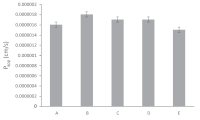
Results: Increasing the proportion of gelatin over guar gum improved some of the granules' and tablets' 2 properties, peaking in Batch D with granules of < 22.35 ° angle of repose and linear consolidation relationship (R > 0.95), and tablets of tensile strength > 12.88 kg/cm², disintegration time < 6.23 min, drug release > 85 % after 30 min, -6 and permeability (P ) > 1 x 10 cm/s after 3 hr. app
Conclusion: Balanced combination of gelatin and guar gum produced tablets with good mechanical resilience and immediate drug release properties. Further studies are needed to optimize gelatin-guar gum ratio for high drugloading immediate-release formulations.
Résumé
Contexte: L'équilibre entre la résistance mécanique et la désintégration rapide, requis pour les comprimés à libération immédiate à forte teneur en principe actif, demeure un défi de formulation, en particulier avec les excipients naturels.
Objectifs: Cette étude a examiné l'effet d'un coprocédé gélatine-gomme guar sur les propriétés de compactage et de libération du médicament des comprimés de paracétamol.
Méthodes: Cinq lots (A à E) de granulés de paracétamol ont été formulés avec des proportions de gélatine et de gomme de guar de 0:1, 4:1, 4:0.5, 5:1 et 5:0 % par rapport à la gomme de guar, par granulation humide prolongée. Les propriétés des granulés avant compression ont été évaluées, puis ils ont été comprimés en comprimés. Les paramètres physico-chimiques des comprimés ont ensuite été analysés.
Résultats: L'augmentation de la proportion de gélatine par rapport à la gomme guar a amélioré certaines propriétés des granulés et des comprimés, avec des performances optimales observées pour le lot D, présentant des granulés avec un angle de repos < 22.35° et une relation linéaire de consolidation (R² > 0.95), ainsi que des comprimés avec une résistance à la traction > 12.88 kg/cm², un temps de désintégration < 6.23 min, une libération du médicament > 85 % après 30 min, et une perméabilité apparente (Papp ) > 1 x 10⁻⁶ cm/s après 3 heures.
Conclusion: The balanced combination of gelatin and guar gum resulted in tablets with good mechanical resistance and immediate release of the active ingredient. Further studies are needed to optimize the gelatin/guar gum ratio to obtain immediate-release formulations with high concentrations of the active ingredient.
Downloads
Article Details
Issue
Section

This work is licensed under a Creative Commons Attribution-NonCommercial-NoDerivatives 4.0 International License.
How to Cite
Share
References
1. Almutairy B, Khafagy E-S, Alalaiwe A, Aldawsari MF, Alshahrani SM, Alsulays BB, Alshetaili AS, Alshehri SM, Fayed MH (2020). Enhancing the poor flow and tableting problems of high drug-loading formulation of canagliflozin using continuous green granulation process and design-of-experiment approach. Pharmaceutics (Basel) 13(12): 473. Doi:10.3390/ph13120473
2. Desai D, Zia H, Quadir A (2020). Tablet technologies: A review. Pharmaceutical Development and Technology 25(5): 527-538.
3. Jivraj M, Martini LG, Thomson CM (2000). An overview of the different excipients useful for the direct compression of tablets. Pharmaceutical
Science and Technolnology Today 3(2): 58-63.
4. Patel M, Poddar S, Sawant K (2015). Development of directly compressible co-processed excipients for dispersible tablets using spray drying. Saudi Pharmaceutical Journal 23(5): 504-510.
5. Akin-Ajani OD, Itiola OA, Odeku OA (2016). Effect of plantain starch as a binder on the mechanical and release properties of paracetamol tablets. African Journal of Biomedical Research 19(1): 41-47
6. Saxena AK, Verma N (2021). Formulation and characterization of modified release microspheres of lornoxicam using okra gum as natural polymer and ethyl cellulose as synthetic polymer. Journal of Pharmaceutical Research International 33(47A): 299-326.
7. Nnamani ND, Eraga S (2022). Evaluation of the compression properties of co-processed paracetamol, gelatin and microcrystalline cellulose
formulation prepared via melt-in agglomeration. Trends in Pharmaceutical Sciences 8(4): 243-252.
8. Eraga SO, Olayemi OJ, Obidiri OP, Osemeke OL, Iwuagwu MA (2024). Effects of starch pregelatinization on the physicochemical and tableting
properties of a co-processed excipient for direct compression. West African Journal of Pharmacy 35(2): 118-130.
9. Ghorani B, Emadzadeh B, Rezaeinia H, Russell SJ (2020). Improvements in gelatin cold water solubility after electrospinning and associated
physicochemical, functional and rheological properties. Food Hydrocolloids 104: 105740. https://doi.org/10.1016/j.foodhyd.2020.105740
10. Hesarinejad MA, Lorenzo JM, Rafe A (2021). Influence of gelatin/guar gum mixture on the rheological and textural properties of
restructured ricotta cheese. Carbonhydrate Polymer Technolnologies and Application 2: 100162. https://doi.org/10.1016/j.carpta.2021.100162
11. Alipal J, Mohd-Puad NAS, Lee TC, Naya NHM, Sahar N, Basi H, Idris MI, Abdullah HZ.(2021). A review of gelatin: properties, sources, process,
applications, and commercialization. Materials Today: Proceedings 42(1): 240-250
12. Kaewpeth K, Yolsuriyan S, Disayathanoowat T, Phokasem P, Jannu T, Renaldi G, Smakradhamrongthai RS (2024). Influence of gelatin and propolis extract on honey gummy jelly properties: optimization using D-optimal mixture design. Gels 10(4): 282. doi:10.3390/gels10040282
13. Permadi A, Wahyuningsih I, Yuliani S, Satar I, Wijayatri R (2022). Effect of gelatin as a binder on turmeric extract tablet formulation. Journal
Farmasi Sains dan Praktis 8(2): 180-187
14. Rangari NT, Nanda RK, Sawant SD (2016). A review on guar gum as a natural binder and disintegrant in tablet formulation. International
Journal of Pharmaceutical Sciences and Research 7(10): 4013-4021.
15. Lal G, Shekhawat N, Yadav S, Choudhary K, Bhatiya M (2021). Guar gum valuable for pharmacological and pharmaceutical conscious:
a review. Journal of Pharmacognosy and Phytochemistry 10(1): 7-13
16. Mudgil D, Barak S, Khatkar BS (2014). Guar gum: Processing, properties and food applications-A Review. Journal of Food Science and Technology 51(3): 409-418.
17. Amjed N, Zeshan M, Farooq A, Naz S (2024). Applications of guar gum polysaccharide for pharmaceutical drug delivery: a review.
International Journal of Biological Macromolecules 257(1): 128390. https://doi.org/10,1016/j.ijbiomac.2023.128390
18. Kumar CS, Kundharaju R (2025). Formulation and selection of controlled release layer for designing the paracetamol sustained release tablet based on in vitro profile.Journal of Neonatal Surgery 14(6s): 198- 209.
19. Alchin J, Dhar A, Siddiqui K, Christo PJ (2022). Why paracetamol (acetaminophen) is a suitable first choice for treating mild to moderate acute pain in adults with liver, kidney or cardiovascular disease, gastrointestinal disorders, asthma or who are older. Central Medical Research and Opinion 38(5): 811- 825
20. Ayoub SS (2021). Paracetamol (acetaminophen): a familiar drug with unexplained mechanism of action. Temperature: Multidisciplinary Biomedical Journal (Austin) 8(4): 351-371.
21. Grim J, Armogida M, Kachroo P, Siddiqui K, Cvinato M, Araga M (2024). Bioequivalence of new pediatric paracetamol oral suspension compared with marketed formulation in healthy adults: a randomized, open-label study. Current Therapeutic Research - Clinical and Experimental Available online: Doi: 10.1016/j.curtheres.2024.100734
22. Odeku OA, Itiola OA (2005). Compaction properties of three types of starch from .Xanthosoma sagittifolium. International Journal of Pharmaceutics 289(1-2): 193-198.
23. Nokhodchi A, Palmer K, Asare-Addo K, Levina, Rajabi-Siahboomi A. Application of Polymer Combinations in Extended Release Hydrophilic
Matrices, In handbook of Polymer for Pharmaceutical Technology, ed: John Wiley & Sons, Inc, 2015: 23-49
24. Indurkar A, Bangde P, Gore M, Agrawal AK, Jain R, Dandekar P (2020). Fabrication of guar gum- gelatin scaffold for soft tissue engineering. Carbonhydrate Polymer Technologies and Applications 1: 100006. https://doi.org/10.1016/j.carpta.2020.100006.
25. Chen P, Ansari MJ, Bokov D, Suksatan W, Rahman ML, Sarjadi MS (2022). A review on key aspects of wet granulation process for continuous pharmaceutical manufacturing of solid dosage oral formulations. Arab Journal of Chemistry 25(2): 103598. https://doi.org/10.1016/j.arabjc.2021.103598
26. Ogunjimi AT, Alebiowu G (2012). Flow and consolidation properties of Neem gum co-processed with two pharmaceutical excipients. Powder Technology 246: 187-192.
27. Yohannes B, Abebe A (2021). Determination of tensile strength of shaped tablets. Powder Technology 383: 11-18.
28. Imbriano A, Fratini C, Bondi G, D'Abbrunzo I, Bertoni S, Tiboni M, Abruzzo A, Hasa D, Pagano C, Csettari L (2025). 3D-printed chewable
gummy tablets: a new tool for oral amoxicillin administration in paediatric population. International Journal of Pharmaceutics 677:125645.
https://doi.org/10.1016/j.pharm.2025.125645
29. Berben P, Bauer-Brandl A, Brandl M, Faller B, Flaten GE, Jacobsen A-C, Brouwers J, Augustustijns P (2018). Drug permeation profiling using cell-free permeation tools: overview and applications. European Journal of Pharmaceutical Sciences 119: 219-233.
30. Goscianska J, Ejsmont A, Olejnik A, Ludowicz D, Stasilowicz A, Cielecka-Pointek J (2020). Design of paracetamol delivery systems based on
functionalized ordered mesoporous carbons. Materials 13(18): 4151; https://doi.org/10.3390/ma13184151
31. Jacobsen AC., Nielsen S, Brandl M and BauerBrandl A (2020). Drug permeability profiling using the novel Permeapad® 96-well plate.
Pharmaceutical Research 37(6): 93. Doi: 10.1007/s11095-020-02807-x
32. Fischer H, Kansy M, Avdeef A, Senner F (2007). Permeation of permanently positive charged molecules through artificial membranesinfluence of physic-chemical properties. European Journal of Pharmaceutical Sciences 31: 32-42
33. Oyeniyi YJ, Nnamani ND (2018). Preparation and evaluation of 5-fluorouracil solid dispersion formulations for therapeutic management of
colorectal cancer (CRC). African Journal of Pharmaceutical Research and Development 10(2): 127-134.
34. Groza JR (2007). Nanocrystalline powder consolidation methods In Nanostructured Materials, 2nd edn. William Andrew Publishing,
2007(5): 173-233. Available at: https://doi.org/10.1016/B978-081551534-0.50007-5.
35. Ilic IG, Kasa Jr PK, Dreu R, Pintye-Hodi K, Srcic S (2009). The compressibility and compactibility of different types of lactose. Drug Development and Industrial Pharmac y 35(10):1271-1280. http://www.tandfonline.com/doi/full/10.1080/03639040902932945.
36. Persson A-S, Pazesh S, Alderborn G (2022). Tabletability and compactibility of α-lactose monohydrate powders of different particle sizes. 1.
Experimental comparison. Pharmaceutical Development and Technology 27: 1-12.
37. Schrieber R, Gareis H. Gelatine Handbook: Theory and Industrial Practice (eds R. Schrieber and H. Gareis) 2007. Available at: https://doi.org/10.1002/9783527610969.ch2. Accessed October 1, 2025.
38. Tranova T, Pyteraf J, Kurek M, Jamrov W, Brnaik W, Spalovska D, Jurkwiewicz K, Grelska J, Kramarcyk D, Muzikova J, Paluch M, Jachowitz R (2022). Fused deposition modelling as a possible approach for the preparation orodispersible tablets. Pharmaceutics 15, 69. https://doi.org/10.3390/ph15010069
39. Dhore M, Muchhala S, Panigrahi D, Bhagat S, Rathod R, Kotak B (2023). Assessment of dissolution, disintegration time, and acid-neutralizing capacity of Butaproxyvon capsules (paracetamol 325 mg and diclofenac potassium 50 mg). Indian Journal of Pharmacy and Pharmacology 10(3): 177-182.