

Detection of hydrogen cyanide in selected anti-malarial plants in Southwest Nigeria Détection de cyanure d'hydrogène dans certaines plantes antipaludiques du sud-ouest du Nigéria
Article Sidebar
Abstract Views | PDF/EPUB Downloads
153
/ 32
/ 25
Main Article Content
Abstract
Background: Cyanogenic glycosides are toxic secondary metabolites produced by plants. The safety of antimalaria plant decoctions consumed by Nigerian indigenes is of great concern.
Objectives: This study aimed to identify and quantify cyanogenic glycosides in selected anti-malarial plants.
Methods: Phytochemical screening, qualitative and quantitative tests were carried out on each sample to detect presence of cyanide. Instrumental methods including Fourier-Transform Infrared Spectroscopy (FTIR) and UltraViolet Spectroscopy (UV) were employed to detect hydrogen cyanide in the plants. Data were analyzed using a standard calibration curve.
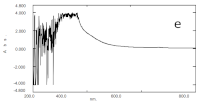
Results: The yield percentages varied, Lawsonia inermis leaves had the highest yield at 10.21 % w/w. phytochemical screening indicated presence of steroids, saponins, flavonoids, and cardiac glycosides but absence of cyanogenic glycosides. Both qualitative and quantitative results showed negative cyanide concentration in all samples. FTIR analysis suggested the presence of nitriles in Lawsonia inermis, however, UV analysis confirmed the absence of cyanide.
Conclusion: These findings indicate that the selected plants, do not contain harmful cyanide levels.
Résumé
Contexte: Les glycosides cyanogènes sont des métabolites secondaires toxiques produits par les plantes. L'innocuité des décoctions de plantes antipaludiques consommées par les populations autochtones du Nigéria suscite de vives préoccupations.
Objectifs: Cette étude visait à identifier et à quantifier les glycosides cyanogènes dans certaines plantes antipaludiques.
Méthodes: Des analyses phytochimiques, qualitatives et quantitatives ont été réalisées sur chaque échantillon afin de détecter la présence de cyanure. Des méthodes instrumentales, notamment la spectroscopie infrarouge à transformée de Fourier (FTIR) et la spectroscopie ultraviolette (UV), ont été utilisées pour détecter le cyanure d'hydrogène dans les plantes. Les données ont été analysées à l'aide d'une courbe d'étalonnage standard.
Résultats: Les pourcentages de rendement ont varié, les feuilles de Lawsonia inermis présentant le rendement le plus élevé (10.21 % p/p). L'analyse phytochimique a révélé la présence de stéroïdes, de saponines, de flavonoïdes et de glycosides cardiotoniques, mais l'absence de glycosides cyanogènes Les résultats qualitatifs et quantitatifs ont tous indiqué une concentration négative en cyanure dans l'ensemble des échantillons. L'analyse FTIR a suggéré la présence de nitriles dans Lawsonia inermis; toutefois, l'analyse UV a confirmé l'absence de cyanure.
Conclusion: Ces résultats indiquent que les plantes sélectionnées ne contiennent pas de niveaux nocifs de cyanure.
Downloads
Article Details
Issue
Section

This work is licensed under a Creative Commons Attribution-NonCommercial-NoDerivatives 4.0 International License.
How to Cite
Share
References
1. Aziato L, and Antwi, HO (2016). Facilitators and barriers of herbal medicine use in Accra, Ghana: an inductive exploratory study. BMC Complementary and Alternative Medicine, 16(1): 1-9, https://doi.org/10.1186/s12906-016-1124-y.
2. Ranasinghe S, Ansumana R, Lamin JM, Bockarie AS, Bangura U, Buanie AG, Stenger DA, Jacobsen KH (2015). Herbs and Herbal combinations used to treat suspected malaria in Bo, Sierra Leone. Journal of Ethnopharmacology 166: 200-204, DOI: 10.1016/j.jep.2015.03.028
3. Suleman S, Beyene Tufa T, Kebebe D, Belew S, Mekonnen Y, Gashe F, Mussa S, Wynendaele E, Duchateau L, De Spiegeleer B (2018). Treatment of malaria and related symptoms using traditional herbal medicines in Ethiopia. Journal of Ethnopharmacology 213: 262-279, DOI:
10.1016/j.jep.2017.10.034.
4. Ishola IO, Oreagba IA, Adeneye AA, Adirije C, Oshikoya KA, Ogunleye OO (2014). Ethnopharmacological survey of herbal treatment of malaria in Lagos, South West. Nigeria Journal of Herbal Medicine 4(4): 224-234, https://doi.org/10.1016/j.hermed.2014.08.001.
5. Nielsen LJ, Stuart P, Picmanova M, Rasmussen S, Olsen CE, Harholt J, Møller BL, Bjarnholt N (2016). Dhurrin metabolism in the developing grain of Sorghum bicolor L. Moench investigated by metabolite profiling and novel clustering analyses of time resolved transcriptomic data. BMC Genomics, 17: 1021, DOI10.1186/s12864-016-3360-4.
6. Møller BL (2010). Functional diversifications of Cyanogenic glycosides. Current Opinion in Plant Biology 13(3): 338-347, Doi: 10.1016/j.pbi.2010.01.009.
7. Morant AV, Jorgensen K, Jorgensen C, Paquette SM, Sanchez-Perez R, Møller BL, Baks, S (2008). Beta glucosidases as detonators of plant chemical defense. Phytochemistry 69: 1795-1813, DOI: 10.1016/j.phytochem.2008.03.006.
8. Boter M, Diaz I (2023). Cyanogenesis, a plant defence strategy against herbivores. International Journal of Molecular Science 24(8): 6982,
https://doi.org/10.3390/ijms24086982.
9. Grant E (2016). Attempted quantification of the cyanogenic glycosides Prunasin and Sambunigrin in Sambucus L. (Elderberry). Honors College, 389 https://digitalcommons.library.umaine.edu/honors/389.
10. Schrenk D, Bignami M, Bodin L, Chipman JK, del Mazo J, Grasl-Kraupp B, Hogstrand C, Hoogenboom LR, Leblanc J, Nebbia CS, Nielsen E, Ntzani E, Petersen A, Sand S, Vleminckx C, Wallace H, Benford D, Brimer L, Mancini FR, Metzler M, Viviani B, Altieri A, Arcella D, Steinkellner H, Schwerdtle, T (2019). Evaluation of health risks related to the presence of cyanogenic glycosides in foods other than raw apricot kernels. EFSA Journal 17(4): e05662, https://doi.org/10.2903/j.efsa.2019.5662.
11. Evans WC (2009). Trease and Evans' Pharmacognosy, 16th Edition. Saunders Elsevier Toronto, Canada.
12. Iosr J, Nkafamiya II, Osemeahon SA, Andema AK, Akinterinwa A (2015). Evaluation of Cyanogenic Glucoside Contents in Some Edible Nuts and Seeds in Girei, Adamawa State, Nigeria. IOSR-Journal of Environmental Science, Toxicology and Food Technology 9(7): 27 - 33, DOI: 10.9790/2402- 09712733.
13. Nwokoro O, Ogbonna JC, Okpala GN (2009). Simple picrate method for the determination of cyanide in Cassava flour. Journal of Biological Research and Biotechnology 7(2): 502-504, DOI: 10.4314/br.v7i2.56582.
14. Enaam YB, Salwa FF, Amany SA, Hanaa MS (2003). Flavonoids and cyanogenic glycosides from the leaves and stem bark of Prunus persica, Batsch (Meet Ghamr) peach local cultivar in assiut region. Bullettin of Pharmaceutical Sciences 26: 55-66, DOI: 10.21608/bfsa.2003.65468.
15. Yulvianti M, Zidorn C (2021). Chemical Diversity of Plant Cyanogenic Glycosides: An overview of reported natural products, Molecules 26(3): 719, DOI: 10.3390/molecules26030719.
16. Julaeha E, Nurzaman M, Wahyudi T, Nurjanah S, Permadi N, Anshori JA (2022). The Development of the Antibacterial Microcapsules of Citrus Essential Oil for the Cosmetotextile Application: A Review. Molecules 27(22): 8090. https://doi.org/10.3390/molecules27228090.
17. Spadaro F, Costa R, Circosta C, Occhiuto F (2012). Volatile composition and biological activity, of Key lime, Citrus aurantiifolia Essential. Natural Product Communications 7(11) 1523-1526, DOI: 10.1177/1934578X1200701128.
18. Ramadaini K, Azizah Z, Zulharmita Rivai H (2020). Overview of pharmacology and product development of Lime (Citrus aurantiifolia).
International Journal of Medical and Pharmaceutical Sciences 5(12): 35-45, DOI: 10.47760/ijpsm.2020.v05i12.007.
19. Kim J, Ko H, Jang M, Han S, Kim H, Kim S (2023). Phytochemical content and antioxidant activity in eight Citrus cultivars grown in Jeju Island according to harvest time. International Journal of Food Properties 26: 14-23, doi: 10.1080/10942912.2022.2151620.
20. Haaz S, Fontaine KR, Cutter G, Limdi N, PerumeanChaney S, Allison DB (2006). Citrus aurantium and synephrine alkaloidsin the treatment of overweight and obesity: an update. Obesity Reviews 7(1): 79-88, doi: 10.1111/j.1467-789X.2006.00195.x.
21. Cheel J, Theoduloz C, Rodriaguez J, SchmedaHirschmann G (2005). Free Radical Scavengers and Antioxidants from Lemongrass Cymbopogon citratus (DC.) Stapf.) Journal of Agricultural and Food Chemistry 53: 2511-2517. doi: 10.1021/jf0479766.
22. Asaolu MF, Oyeyemi OA, Olanloku JO (2009). Chemical compositions, Phytochemical Constituents and in vitro Biological Activity of
Various Extracts of Cymbopogon citratus. Pakistan Journal of Nutrition 8: 1920-1922, doi: 10.3923/pjn.2009.1920.1922.
23. Dev S (2006). A selection of prime Ayurvedic plant drugs, Ancient-Mordern concordance. Anamaya Publishers New Delhi, 276-279, ISBN: 8188342351.
24. Nayak BS, Isitor G, Davis EM, Pillai GK (2007). The evidence based wound healing activity of Lawsonia inermis Linn. Phytotherapy Research 21: 827-831, doi: 10.1002/ptr.2181.
25. Kirkland D, Marzin D (2003). An assessment of genotoxicity of 2-hydroxy-1, 4-naphthoquinone, the natural dye ingredient of Henna. Mutation Research 537: 183-199, https://doi.org/10.1016/S1383-5718(03)00077-9
26. Shah K., Patel M.B., Patel R.J., Parmar, P.K. (2010). Mangifera indica (Mango). Pharmacognosy Review 4(7): 42-48, doi: 10.4103/0973-7847.65325.
27. Ojo A, Oyinloye E, Ajiboye B, Ojo AB, Akintayo C, Okezie B (2014). Dichlorvos induced nephrotoxicity in rats' kidney: Protective effect of Alstonia boonei stem bark extract. International Journal of Pharmacognosy 1(7): 429-437, http://dx.doi.org/10.13040/IJPSR.0975-8232IJP1(7).429-37
28. Opoku F, Akoto O (2014). Antimicrobial and phytochemical properties of Alstonia boonei extracts. Organic Chemistry: Current Research 4(1): 1000137, doi: 10.4172/2161-0401.1000137.
29. Akinnawo O, Anyaso G, Osilesi O (2017). Aqueous fraction of Alstonia boonei De Wild leaves suppressed inflammatory responses in carageenan and formaldehyde induced arthritic rats. Biomedicine and Pharmacotherapy 86: 95-101, doi: 10.1016/j.biopha.2016.11.145.
30. Omoya F, Oyebola T (2019). Antiplasmodial activity of stem bark and leaves of Alstonia boonei De Wild. Journal of Microbiology & Experimentation 7(5): 241-245, doi: 10.15406/jmen.2019.07.00267.
31. Ajose D, Onifade O, Wemambu I (2019). Phytochemical analysis and in-vitro antibacterial evaluation of leaf and bark extract of Alstonia boonei. African Journal of Pharmacy and Pharmacology 13(17): 287-291, doi: 10.5897/AJPP2019.5026.
32. Arogbodo, J. (2019). Phytochemical screening and Antimicrobial effect of ethanolic leaf extract of Alstonia boonei De Wild (Apocynaceae) on some selected pathogenic microorganisms. International Journal of Current Microbiology and Applied Sciences 8(7): 1373-1379, doi:
https://doi.org/10.20546/ijcmas.2019.807.164.
33. Ojo, OA (2014). Preliminary qualitative analysis of cancer chemopreventive agents in Irugnga gabonensis Baill, Alstonia boonei De Wild and
Bridelia ferruginea Bth. stem-bark from Southwest, Nigeria. African Journal of Basic & Applied Sciences 6(4): 112, doi: 10.5829/idosi.ajbas.2014.6.4.86120.
34. Oderinde O, Olaitan O, Shagari AB, Bashar KM, Bilbis F (2016). Phytochemical analysis and in-vitro screening of Citrus aurantiifolia leaf extracts for schizonticidal activity on clinical isolates of Plasmodium falciparum. The Beam Journal of Arts and Science 9: 1118-5953.
35. Dakare MA, Ameh DA, Agbaji SA, Atawodi SE (2012). Effects of processing techniques on nutritional and anti-nutritional contents of Mango (Mangifera indica) seed kernel. World Journal of Young Researchers 2(3): 155.
36. Knez Hrnčič M, Cör D, Simonovska J, Knez Ž, Kavrakovski Z, and Rafajlovska V (2020). Extraction techniques and anal y ti cal methods for
characterization of active compounds in Origanum species. Molecules 25(20): 4735.
37. Tompsett (1959). A note on the determination of cyanide in biological materials. Clinical Chemistry 5(6): 587-591.