

Comparative study of the quality of rosuvastatin tablet brands obtained from Mushin, Lagos, Nigeria. Étude comparative de la qualité des marques de comprimés de rosuvastatine obtenues à Mushin, Lagos, Nigéria.
Article Sidebar
Abstract Views | PDF/EPUB Downloads
194
/ 33
/ 20
Main Article Content
Abstract
Background: Quality of pharmaceuticals plays a vital role in ensuring safety and therapeutic performance. Rosuvastatin, one of the most potent statins for lowering cholesterol levels, requires strict compliance with pharmacopoeia standards to guarantee effectiveness in clinical use.
Objective: This study evaluated the quality of six rosuvastatin tablet brands available in Pharmacies in Mushin, Lagos, Nigeria.
Methods: Six brands of rosuvastatin calcium tablets (20 mg) obtained from local pharmacies were assessed using British Pharmacopoeia (BP) methods. Physical tests including uniformity of weight, friability, and hardness and chemical tests comprising dissolution studies in phosphate buffer (pH 6.8) using USP dissolution apparatus II, and percentage purity was determined by UV-visible spectrophotometry at 241 nm.
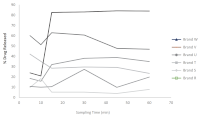
Results: All brands complied with BP limits for uniformity of weight, hardness, and friability. However, dissolution testing revealed marked variations: only the innovator brand released more than 80 % of the drug within 30 minutes, whereas the generic brands released significantly lower amounts (5.15-60.61 %). Percentage purity also showed wide variability, ranging from 30.3 % to 131.2 %, with only the innovator (100 %) meeting BP specifications (98-102 %).
Conclusion: The evaluated rosuvastatin brands met basic physicochemical requirements, but major discrepancies in dissolution and purity were observed. Such variations may compromise therapeutic efficacy and patient safety, underscoring the need for strengthened post-market surveillance and strict regulatory oversight.
Résumé
Contexte:
La qualité des produits pharmaceutiques joue un rôle essentiel dans la garantie de leur innocuité et de leur efficacité thérapeutique. La rosuvastatine, l'une des statines les plus puissantes pour la réduction du taux de cholestérol, nécessite une conformité stricte aux normes de la pharmacopée afin d'assurer son efficacité en pratique clinique.
Objectif: Cette étude a évalué la qualité de six marques de comprimés de rosuvastatine disponibles dans les pharmacies de Mushin, à Lagos, au Nigéria.
Méthodes: Six marques de comprimés de rosuvastatine calcique (20 mg) provenant de pharmacies locales ont été évaluées selon les méthodes de la Pharmacopée britannique (BP). Les tests physiques comprenaient l'uniformité de poids, la friabilité et la dureté, et les tests chimiques, incluant des études de dissolution dans un tampon phosphate (pH 6.8) à l'aide de l'appareil de dissolution USP II. Le pourcentage de pureté a été déterminé par spectrophotométrie UV-visible à 241 nm.
Résultats: Toutes les marques étaient conformes aux limites de la Pharmacopée britannique (BP) en matière d'uniformité de poids, de dureté et de friabilité. Cependant, les tests de dissolution ont révélé des variations importantes : seule la marque de référence a libéré plus de 80 % du principe actif en 30 minutes, tandis que les marques génériques en ont libéré des quantités significativement inférieures (5.15 % à 60.61 %). Le pourcentage de pureté a également présenté une grande variabilité, allant de 30.3 % à 131.2 %, seule la marque de référence (100 %) respectant les spécifications de la BP (98 % à 102 %).
Conclusion: Les marques de rosuvastatine évaluées répondaient aux exigences physico-chimiques de base, mais des écarts importants de dissolution et de pureté ont été observés. De telles variations peuvent compromettre l'efficacité thérapeutique et la sécurité des patients, soulignant la nécessité d'un renforcement de la surveillance post-commercialisation et d'un contrôle réglementaire strict.
Downloads
Article Details
Issue
Section

This work is licensed under a Creative Commons Attribution-NonCommercial-NoDerivatives 4.0 International License.
How to Cite
Share
References
1. Momin ES, Asma AK, Tejasvi K, Muhammad AP, Aqsa A, Vijayalakshmi M, Muhammad S, Abeer OE, and Muhammad AP Sr. (2023). The effects of probiotics on cholesterol levels in patients with metabolic syndrome: a systematic review. Cureus 15(4): 1-9.
2. Paukner K, Králová LI, Poledne R (2022). Cholesterol in the cell membrane-an emerging player in atherogenesis. International Journal of
Molecular Sciences 23(1):533. https://doi.org/10.3390/ijms23010533.
3. Khodadadi E, Khodadadi E, Chaturvedi P, Moradi M (2025). Comprehensive insights into the cholesterol-mediated modulation of membrane
function through molecular dynamics simulations. Membranes,15(6):173. https://doi.org/10.3390/membranes15060173.
4. Devi S, Kumar P, Kaur G (2023). Biological significance of steroids. In Steroids and their medicinal potential. Bentham Science Publishers pp.
98-124.
5. Idoko A, Ugwudike PO, Ayomide TA, Blessing NO (2020). Cholesterol and its implications: a review. Universal Journal of Pharmaceutical Research 5(6): 52-63.
6. Feingold KR (2024). Introduction to lipids and lipoproteins. Endotext [internet].
7. Zhang J, Zhang Q, Wang X, Wang B, Zhou J, Wu Y (2025). Ischemic stroke in the context of high lowdensity lipoprotein cholesterol: A 30-year global burden perspective of 204 nations. Journal of Stroke and Cerebrovascular Diseases 108418. https://doi.org/10.1016/j.jstrokecerebrovasdis.2025.108418.
8. Pirillo A, Norata GD (2023). The burden of hypercholesterolemia and ischemic heart disease in an ageing world. Pharmacological Research
193:106814.
9. Ferri N, Ruscica M, Fazio S, Corsini A (2024). LowDensity Lipoprotein Cholesterol-Lowering Drugs: A Narrative Review. Journal of Clinical Medicine 13(4):943. https://doi.org/10.3390/jcm13040943.
10. Jacobson TA (2006). Statin safety: lessons from new drug applications for marketed statins. The American Journal of Cardiology 97(8): S44-S51.
11. Luvai A, Mbagaya W, Hall AS, Barth JH (2012). Rosuvastatin: a review of the pharmacology and clinical effectiveness in cardiovascular disease. Clinical Medicine Insights: Cardiology 6: 7-33.
12. Calza L (2009). Long-term use of rosuvastatin: a critical risk benefit appraisal and comparison with other antihyperlipidemics. Drug, Healthcare and Patient Safety 25-33.
13. White CM (2002). A review of the pharmacologic and pharmacokinetic aspects of rosuvastatin. The Journal of Clinical Pharmacology 42(9):963-970.
14. McTaggart F (2003). Comparative pharmacology of rosuvastatin. Atherosclerosis Supplements 4(1):9-14.
15. Hu M, Tomlinson B (2014). Evaluation of the pharmacokinetics and drug interactions of the two recently developed statins, rosuvastatin and pitavastatin. Expert Opinion on Drug Metabolism & Toxicology 10(1):51-65.
16. Jo JH, Park HS, Lee DH, Han JH, Heo KS, Myung CS (2021). Rosuvastatin inhibits the apoptosis of platelet-derived growth factor-stimulated vascular smooth muscle cells by inhibiting p38 via autophagy. The Journal of Pharmacology and Experimental Therapeutics 378(1):10-19.
17. Duarte JG, Duarte MG, Piedade AP, MascarenhasMelo F (2025). Rethinking pharmaceutical industry with quality by design: application in research, development, manufacturing, and quality assurance. The AAPS Journal 27(4):96. https://doi.org/10.1208/s12248-025-01079-w.
18. Lemmens T, Gibson S (2014). Decreasing the data deficit: improving post-market surveillance in pharmaceutical regulation. McGill Law Journal 59(4): 943-988.
19. Cagil E Keser Z (2026). Postmarket drug monitoring. In Translational Neurosurgery. Academic Press. pp. 269-272.
20. Ali S, Haleem N (2024). Balancing Innovation and Access: The War on Generic Drugs. Liberal Journal of Management & Social Science 3(1): 10-22.
21. Oyawaluja BO, Adepoju-Bello AA, and Abibu MA (2024). Comparative study of the quality of atorvastatin tablet brands obtained from Lagos, Nigeria. West African Journal of Pharmacy 35(2): 41-56.
22. Alwadi AY, Arafeh GM, Almehlesi MS, Maswadeh HM, Salman IM, Ameer OZ (2022). Comparative Analysis of Commercially Available Acetaminophen Tablets in Saudi Arabia. Dissolution Technologies 29(3): GC1-12
23. United States Pharmacopeial Convention (2018). Committee of Revision (Dissolution). United States Pharmacopeia, the National Formulary. United States Pharmacopeial Convention, Incorporated.
24. AlBratty M, Alhazmi HA, Alam MS, Alam MI, Javed SA, Alam N (2020). Assessment of physicochemical properties and comparison of dissolution profiles of metformin hydrochloride tablets in Saudi Arabia. Dissolution Technologies 27(1): 36-44.
25. Ahmed R (2024). Ensuring Quality Medicine is not a Single Event but Rather Combines Effects of a Pharmaceutical Company. Radinka Journal of Health Science 2(2): 226-241.
26. Pockle RD, Masareddy RS, Patil AS, Patil, PD (2023). A comprehensive review on pharmaceutical excipients. Therapeutic delivery 14(7):443-458.
27. Arshad MU (2024). Regulatory Challenges in the Development of Combination Drugs. American Journal of Pharmaceutics 5(5):15-35.
28. Ajima U, Omeni RC, Onah JO, David J, Ehoche JO (2025). Post-marketing quality assessment of some brands of rosuvastatin tablets available in Jos, NorthCentral Nigeria. BMC Chemistry 19(1):112. https://doi.org/10.1186/s13065-025-01470-w.