Toxicological evaluation of a complementary medicine for insomnia in rodents
Évaluation toxicologique d'un médicament complémentaire contre l'insomnie chez les rongeurs
DOI:
https://doi.org/10.82351/wajp.vol37no1.458Keywords:
Relaxing Tea, toxicity, Matricaria chamomilla, Hypericum perforatum, insomnia, herbal medicine, tisane relaxante, toxicité, insomnie, phytothérapieAbstract
Background: Relaxing Tea is a herbal remedy widely used in Nigeria in the management of insomnia. Given than literature data have highlighted the possibility of adverse effects, sometimes life-threatening, arising from the use of herbal remedies, we conducted an extensive toxicological evaluation of this complementary medicine.
Method: In an acute toxicity test, mice were orally administered Relaxing Tea up to 6000 mg/kg. Analyses of rat tissue and serum biochemical, haematological, and semen parameters were carried out following daily administration of Relaxing Tea at 100, 200, and 400 mg/kg orally for 90 days. Histology of critical organs was also conducted.
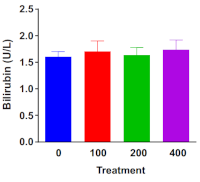
Result: Relaxing Tea at 6000 mg/kg was non-lethal in mice. Daily dosing of Relaxing Tea for 90 days resulted in increased serum levels of Aspartate aminotransferase (AST), Alanine aminotransferase (ALT), creatinine, urea, and triglycerides, as well as an increase in sperm percentage abnormality. In contrast, there were decreases in kidney catalase, glutathione, and sperm counts compared to the control group (saline 10 ml/kg). However, there were no significant differences in weight, haematological parameters, serum and liver anti-oxidant parameters. Treated rats also showed signs of oedema in the brain, congestion of liver blood vessels, and degeneration of the seminiferous tubules, but no toxic effect on kidneys histologically.
Conclusion: These results suggest that Relaxing Tea may not be considered safe following long-term exposure.
Résumé
Contexte: La tisane relaxante est un remède à base de plantes largement utilisé au Nigéria pour le traitement de l'insomnie. Compte tenu des données publiées soulignant la possibilité d'effets indésirables, parfois mortels, liés à l'utilisation de remèdes à base de plantes, nous avons mené une évaluation toxicologique approfondie de cette médecine complémentaire.
Méthode: Lors d'un test de toxicité aiguë, des souris ont reçu par voie orale une tisane relaxante jusqu'à une dose de 6 000 mg/kg. Des analyses biochimiques, hématologiques et spermatiques ont été réalisées sur des tissus et du sérum de rats après administration quotidienne de tisane relaxante par voie orale à des doses de 100, 200 et 400 mg/kg pendant 90 jours. Une analyse histologique des organes vitaux a également été effectuée.
Résultats: L'infusion relaxante à la dose de 6 000 mg/kg n'était pas létale chez la souris. L'administration quotidienne de cette infusion pendant 90 jours a entraîné une augmentation des taux sériques d'aspartate aminotransférase (AST), d'alanine aminotransférase (ALT), de créatinine, d'urée et de triglycérides, ainsi qu'une augmentation du pourcentage d'anomalies spermatiques. En revanche, on a observé une diminution de la catalase rénale, du glutathion et du nombre de spermatozoïdes par rapport au groupe témoin (solution saline à 10 ml/kg). Cependant, aucune différence significative n'a été constatée en ce qui concerne le poids, les paramètres hématologiques, ainsi que les paramètres antioxydants sériques et hépatiques. Les rats traités ont également présenté des signes d'œdème cérébral, de congestion des vaisseaux sanguins hépatiques et de dégénérescence des tubes séminifères, sans effet toxique observable sur les reins à l'examen histologique.
Conclusion: Ces résultats suggèrent que la tisane relaxante pourrait ne pas être considérée comme sûre en cas d'exposition prolongée.
Downloads
References
1. Eisenberg DM, Davis RB, Ettner SL, Appel S, Wilkey S, Van Rompay M, Kessler RC (1998). Trends in alternative medicine use in the United States, 1990-1997: results of a follow-up national survey. Journal of the American Medical Association. 280(18):1569-1575.
2. Bent S, Ko R (2004). Commonly used herbal medicines in the United States: a review. The American Journal of Medicine. 116:478-485.
doi:10.1016/j.amjmed.2003.10.036.
3. Gurib-Fakim A (2006). Medicinal plants: traditions of yesterday and drugs of tomorrow. Molecular Aspects of Medicine. 27:1-93.
doi:10.1016/j.mam.2005.07.008.
4. Firenzuoli F, Gori L (2007). European traditional medicine - International congress - introductory statement. Evidence-Based Complementary and Alternative Medicine. 4.
5. Ekor M (2013). The growing use of herbal medicines: issues relating to adverse reactions and challenges in monitoring safety. Frontiers in Pharmacology. 4:177. doi:10.3389/fphar.2013.00177.
6. Awodele O, Daniel A, Popoola T, Salami E (2013). A study on pharmacovigilance of herbal medicines in Lagos West Senatorial District, Nigeria. International Journal of Risk and Safety in Medicine. 25:205-217. doi:10.3233/JRS-130604.
7. Lae KZW, Su SS, Win NN, Than NN, Ngwe H (2019). Isolation of lasiodiplodin and evaluation of some biological activities of the stem barks of Phyllanthus albizzioides (Kurz) Hook. f. SciMedicine Journal. 1:199-216. doi:10.28991/SciMedJ-2019-0104-5.
8. Farnsworth NR (1988). Screening plants for new medicines. Biodiversity. 15:81-99.
9. World Health Organization (2005). National policy on traditional medicine and regulation of herbal medicines: report of a WHO global survey. World Health Organization.
10. Fugh-Berman A (2000). Herb-drug interactions. The Lancet. 355:134-138. doi:10.1016/S0140-6736(99)06457-0.
11. Abu-Irmaileh BE, Afifi FU (2003). Herbal medicine in Jordan with special emphasis on commonly used herbs. Journal of Ethnopharmacology. 89:193-197.
12. Awodele O, Popoola T, Amadi K, Coker H, Akintonwa A (2013). Traditional medicinal plants in NigeriaRemedies or risks. Journal of Ethnopharmacology. 150:614-618. doi:10.1016/j.jep.2013.09.015.
13. Srivastava JK, Shankar E, Gupta S (2010). Chamomile: a herbal medicine of the past with a bright future. Molecular Medicine Reports. 3:895-901.
14. Cherniack EP (2006). The use of alternative medicine for the treatment of insomnia in the elderly. Psychogeriatrics. 6:21-30.
15. Antoniades J, Jones K, Hassed C, Piterman L (2012). Sleep… naturally: a review of the efficacy of herbal remedies for managing insomnia. Alternative and Complementary Therapies. 18:136-140.
16. Kim HL, Streltzer J, Goebert D (1999). St. John's wort for depression: a meta-analysis of well-defined clinical trials. The Journal of Nervous and Mental Disease. 187:532-538.
17. Reigner BG, Blesch K (2002). Estimating the starting dose for entry into humans: principles and practice. European Journal of Clinical Pharmacology. 57:835-845.
18. Nair A, Jacob S (2016). A simple practice guide for dose conversion between animals and human. Journal of Basic and Clinical Pharmacy. 7:27.
19. Varshney R, Kale RK (1990). Effects of calmodulin antagonists on radiation-induced lipid peroxidation in microsomes. International Journal of Radiation Biology. 58:733-743.
20. Beutler E, Duron O, Kelly BM (1963). Improved method for the determination of blood glutathione. The Journal of Laboratory and Clinical Medicine. 61:882-888.
21. Habig WH, Pabst MJ, Jakoby WB (1974). Glutathione S-transferases: the first enzymatic step in mercapturic acid formation. The Journal of
Biological Chemistry. 249:7130-7139.
22. Misra HP, Fridovich I (1972). The role of superoxide anion in the autoxidation of epinephrine and a simple assay for superoxide dismutase. The Journal of Biological Chemistry. 247:3170-3175.
23. Sinha AK (1972). Colorimetric assay of catalase. Analytical Biochemistry. 47:389-394.
24. Morakinyo A, Adeniyi O, Arikawe A (2008). Effects of Zingiber officinale on reproductive functions in the male rat. African Journal of Biomedical Research. 11.
25. Zong A, Cao H, Wang F (2012). Anticancer polysaccharides from natural resources: a review of recent research. Carbohydrate Polymers.
90:1395-1410.
26. Abamara NC (2013). Factors precipitating insomnia as perceived by low cadre company workers in Nigeria. Journal of Biology, Agriculture and Healthcare. 3:31-36.
27. Gureje O, Kola L, Ademola A, Olley BO (2009). Profile, comorbidity and impact of insomnia in the Ibadan study of ageing. International Journal of Geriatric Psychiatry. 24:686-693.
28. Gureje O, Oladeji BD, Abiona T, Makanjuola V, Esan O (2011). The natural history of insomnia in the Ibadan study of ageing. Sleep. 34:965-973.
29. Adewole T, Kuteyi A, Bello I (2013). Sleep disorders and sleep quality among adults patients presenting at General Outpatient Department in Ile Ife, Nigeria - A preliminary report. European Respiratory Society.
30. Anthony AT, Adebukola FO, Muftau SO, Azeez I (2019). The clinical correlates and self-management of insomnia among patients presenting in a tertiary health institution, South West Nigeria.
31. Budzinski J, Foster B, Vandenhoek S, Arnason J (2000). An in vitro evaluation of human cytochrome P450 3A4 inhibition by selected commercial herbal extracts and tinctures. Phytomedicine. 7:273-282.
32. Brown TM (2000). Acute St. John's wort toxicity. American Journal of Emergency Medicine.
33. Dugoua J, Mills E, Perri D (2006). Safety and efficacy of St. John's wort (Hypericum) during pregnancy and lactation. Canadian Journal of Clinical Pharmacology.
34. Gregoretti B (2004). Toxicity of Hypericum perforatum (St. John's wort) administered during pregnancy and lactation in rats. Toxicology and Applied Pharmacology. 200:201-205.
35. Qureshi S. Studies on the cytological, biochemical and reproductive toxicity of St. John's Wort after chronic treatment in Swiss albino mice.
36. Obach RS (2000). Inhibition of human cytochrome P450 enzymes by constituents of St. John's Wort, an herbal preparation used in the treatment of depression. Journal of Pharmacology and Experimental Therapeutics. 294:88-95.
37. Komoroski BJ, Zhang S, Cai H, et al. (2004). Induction and inhibition of cytochromes P450 by the St. John's wort constituent hyperforin in human hepatocyte cultures. Drug Metabolism and Disposition. 32:512-518.
38. OECD (2008). Test 425. Acute Oral Toxicity - Up-andDown Procedure (UDP). OECD Guidelines for the Testing of Chemicals, Section 4.
39. Bhardwaj S, Gupta D (2012). Study of acute, subacute and chronic toxicity test. International Journal of Advanced Research in Pharmaceutical and Biosciences. 2:103-129.
40. Wang M, Guckland A, Murfitt R, et al. (2019). Relationship between magnitude of body weight effects and exposure duration in mammalian
toxi cology studies and impli cations for ecotoxicological risk assessment. Environmental Sciences Europe. 31:38.
41. Parasuraman S (2011). Toxicological screening. Journal of Pharmacology and Pharmacotherapeutics. 2:74-79.
42. Hosten AO (1990). BUN and creatinine. In: Clinical Methods: The History, Physical, and Laboratory Examinations, 3rd edition. Butterworths.
43. Arika W, Nyamai D, Osano K, Ngugi M, Njagi E (2016). Biochemical markers of in vivo hepatotoxicity. Journal of Clinical Toxicology. 6:1-8.
44. Hilscher M, Sanchez W (2016). Congestive hepatopathy. Clinical Liver Disease. 8:68.
45. Morakinyo A, Achema P, Adegoke O (2010). Effect of Zingiber officinale (Ginger) on sodium arseniteinduced reproductive toxicity in male rats. African Journal of Biomedical Research. 13:39-45.
Published
Issue
Section
License
Copyright (c) 2026 West African Journal of Pharmacy

This work is licensed under a Creative Commons Attribution-NonCommercial-NoDerivatives 4.0 International License.